

Fashion Diary
Suede-effect fabric and dressmaking suede – what you should know

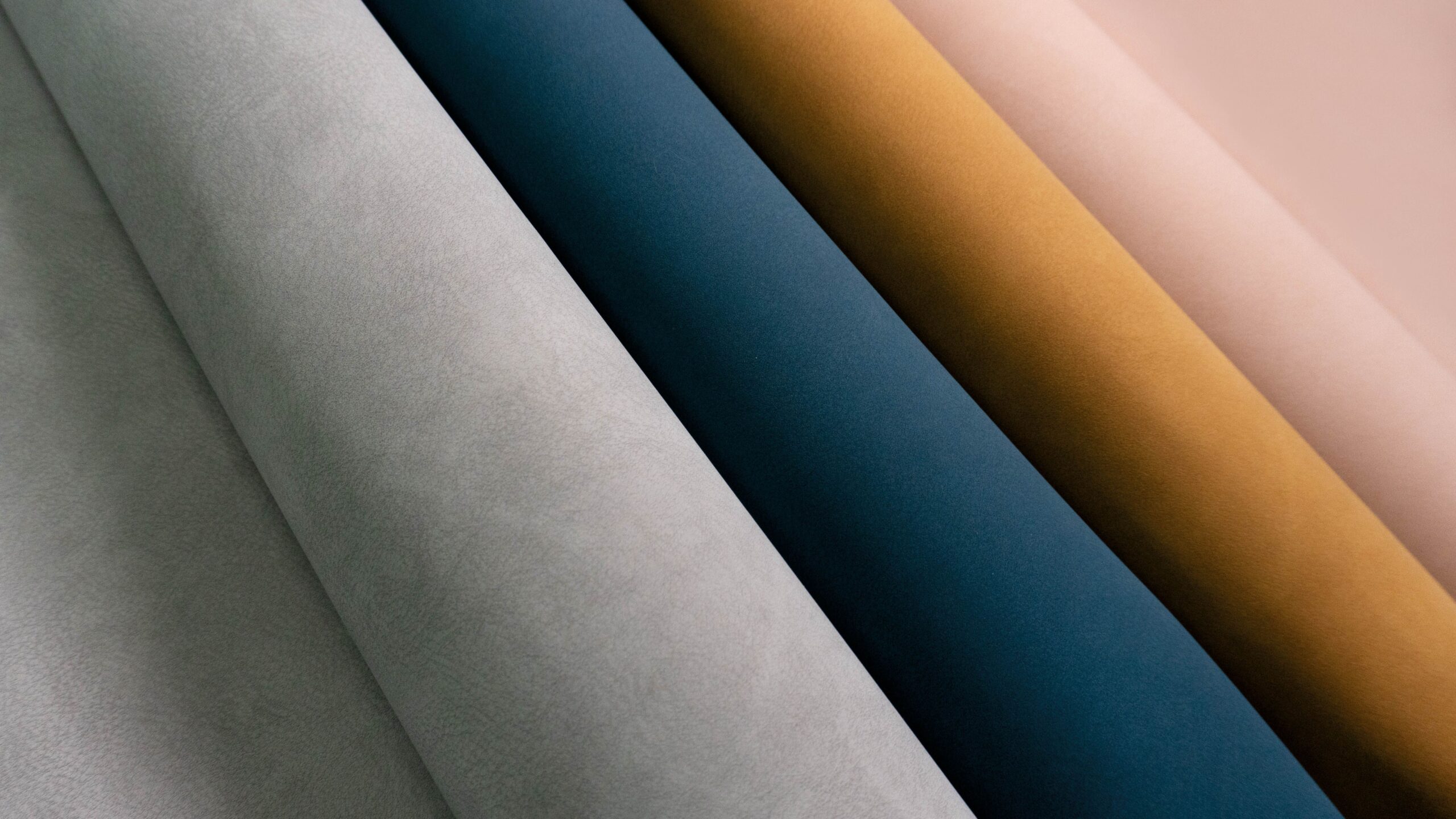
What a fabric shop calls suede is usually a soft polyester knit with a few per cent of elastane, not leather, and that single difference shapes everything that happens at the sewing machine. Suede-effect dressmaking fabric earns its place in garments meant to keep a soft line: easy skirts, dresses, unstructured jackets and coats. Find out how it is built, how it behaves under the needle and which shapes suit it best!
Suede-effect fabric in brief:
- Surface: a short matt nap with a quiet sheen, and the nap shows in the light, so every pattern piece goes the same way round.
- Figures per listing: weight and fibre content shift from colour to colour, so you read them on the variant you are buying.
- Give and recovery: a few per cent of elastane in a knitted base changes the needle and the stitch you reach for.
- At the machine: clips instead of pins, less pressure on the presser foot and finished edges, as a knitted base can fray.
What is suede-effect dressmaking fabric?
In this category it is a smooth, velvety polyester knit with a touch of elastane, finished so the surface sits very close to real suede. The structured build gives it stability and spring, while a discreet sheen adds a polished look. It drapes beautifully and holds its shape at the same time.
Our suede-effect fabric by the metre comes from one family in several colours, and the figures on each listing differ. Cognac is 95% polyester and 5% elastane at 300 GSM, while burgundy runs to 96% polyester and 4% elastane at the same weight. Deep black sits a little lighter at 280 GSM, on the same 150 cm width.
Shops describe the same surface in several ways. Synthetic suede is the plainest of those names, and eco suede speaks about look and softness rather than fibre origin. Suede material of this type can be built as a nonwoven, a woven cloth or a knit, so two bolts that look alike may sew very differently. The dense knitted version is also sold under the name scuba suede fabric, and the fibre content is read from the label on the bolt itself, not from the trade name.
Suede-effect fabric versus real suede – what settles the choice?
Three things separate them: where the material comes from, how it feels in the hand and how the finished garment will be worn.
Origin and fibre content
Real suede comes from an animal skin, most often from its inner layer, whose surface is mechanically buffed into a short, soft nap. Faux suede fabric is a textile, and in this category a polyester and elastane knit, so its label carries fibre names and percentages.
Surface look and handle
Both surfaces carry a short matt nap, though they differ in how even they are. Leather suede varies from piece to piece because it starts as a natural raw material, whereas the knitted version repeats across the whole bolt and shows a quiet sheen. Nap direction shows on both, so every pattern piece goes the same way round.
Care and everyday wear
Leather is usually left to a specialist and refreshed with a brush between visits. With an elastane knit the safe route is a cool wash on a gentle cycle, no wringing and no hot iron, because heat takes the spring out of elastane. Detailed instructions always come from the label on the piece you own. The listings name resistance to creasing among this knit’s properties.
What can you make from suede-effect fabric?
Outerwear and simple, fluid shapes are where most of it ends up. In our range the listings for this knit point to coats, jackets, dresses, trousers and shorts, and the limit sits in how the garment is constructed. A coat is the project where weight and stiffness matter most, which is why coat fabrics are chosen around the shape and the lining rather than the colour alone.
Jackets and coats in faux suede
A faux suede coat works best cut straight or gently flared, without sharp breaks and without a dense grid of front seams. A heavier weight helps a collar and lapel keep their form, a lighter one gives a more fluid fall. Jacket fabrics are judged above all on whether they hold their shape in movement, and the springiness of a knit counts in its favour here.
Skirts, dresses and trousers
In a skirt or a dress the fall of the cloth leads every other consideration. A faux suede dress settles softly, so it takes straight lines and a light flare well; deep pleats need a sharp press, and with polyester and elastane a hot iron is a risk. Trouser fabrics have to survive a bent knee and a long sit, which makes built-in give an asset.
How do you choose faux suede for a particular project?
Set the shape you have in mind against the listing: every variant in this family is listed for the same garment types.
Four things to check on the variant you pick:
- Weight – the listings give 280 or 300 GSM depending on the colour.
- Fibre content – 4 or 5% elastane changes how much give the finished piece has.
- Width – 150 cm across the cognac, burgundy and black variants affects how the pieces lie.
- Nap direction – every piece faces one way, so the allowance is planned differently than for a smooth cloth.
Every colour in this family is the same cloth in a different shade, and some of the listings show Oeko-Tex Standard 100, meaning the composition has been tested for harmful substances. It is worth reading those figures before you order dressmaking suede, because the pattern is planned around a given width.
How do you match suede-effect fabric to the season?
This knit holds warmth only as far as the build of the garment and the layer underneath allow. A lined coat worn over a jumper keeps the wind out in winter, while a loose dress in the same cloth stays in use for most of the year. When you plan for layers, check the sleeve, because a jumper asks for more room in it than a blouse, and a fastening that closes at the neck holds warmth better than an open front.
In these three variants suede fabric by the metre comes off a 150 cm bolt, and how much you need follows from the pattern, the size, the nap direction and the technical allowance.
How does faux suede behave while you sew?
Under the needle it behaves like a knit while it looks like suede. A napped surface likes to travel between layers.
An order of work that makes it easier:
- Lay the pattern one way – nap direction shifts the shade as the light moves.
- Hold pieces with clips or weights – pins can leave a mark in the surface.
- Test the needle on a scrap – with a suede knit you begin with a stretch or Microtex needle, never a leather one.
- Lengthen the stitch and ease the presser foot – skipped stitches call for a different needle type.
- Finish the edges – a knitted base can fray along the cut line.
A walking foot or a dual feed earns its keep the moment two napped layers start travelling against each other.
Does suede-effect fabric need lining?
Lining follows from the way a garment is built, and the answer differs for two pieces cut from the same bolt. A jacket or a coat usually gains from it, because it slides over a jumper sleeve and hides the seam allowances, while a simple skirt or a loose dress often does well with a careful edge finish.
On close-fitting styles a lining helps hold the shape where the strain gathers, though it costs a little softness. Choose a thin, smooth one so no extra stiffness lands where the cloth is meant to move freely.
Suede-effect fabric – what to remember before you buy
This cloth shows its full range in garments with a soft line: a straight coat, an easy dress, a skirt with a gentle fall, a jacket without rigid topstitching. Where a project has to hold a sharp, sculpted form – a stiffened collar, deep pleats, structural seaming – a firmer cloth, a woven one among them, will serve better. If both cloths read much the same on the surface, let the cut you have in mind guide the choice.
Frequently asked questions about suede-effect fabric
Is suede-effect fabric leather?
No, in this category it is a textile made of polyester and elastane, which also means you measure it off a bolt of a set width instead of matching up irregular hides.
Does faux suede stretch?
It does, because it is a knit with elastane in it. When you join the pieces, set a stretch stitch and avoid pulling the layers under the foot.
Which needle should you use for suede-effect fabric?
A wedge-point needle made for leather cuts through the loops of a knit, so it stays with real leather. On the denser variants a size 80-90 stretch or Microtex needle is a sound starting point.
Can you wash suede-effect fabric?
Usually yes, on a cool wash and a gentle cycle. Before you cut, run a scrap through the same wash to see how the nap and the measurements come out.
What can you make from faux suede?
For a first attempt a straight skirt or a loose dress is the easiest, as both need few seams and no sharp pressing.
 Garment Type
 Blouse
 Coat
Coat Dress
Dress Hat
Hat Hoodie
 Jacket
 Leggings
 Pyjama
 Shirt
Shirt Shorts
 Skirt
Skirt Sweater
 Swimwear
 Trousers
 T-shirt
 Vest
Vest Fabric Type
 Knitted
 Woven
Woven Seasons
 Spring/Summer
 Autumn/Winter
 Collection
 Occasion Wear
 Business Wear
 Active Wear
 Casual Wear
 Decorative
