

Fashion Diary
Autumn/Winter 2026/2027 colour trends – the shades that shape the season

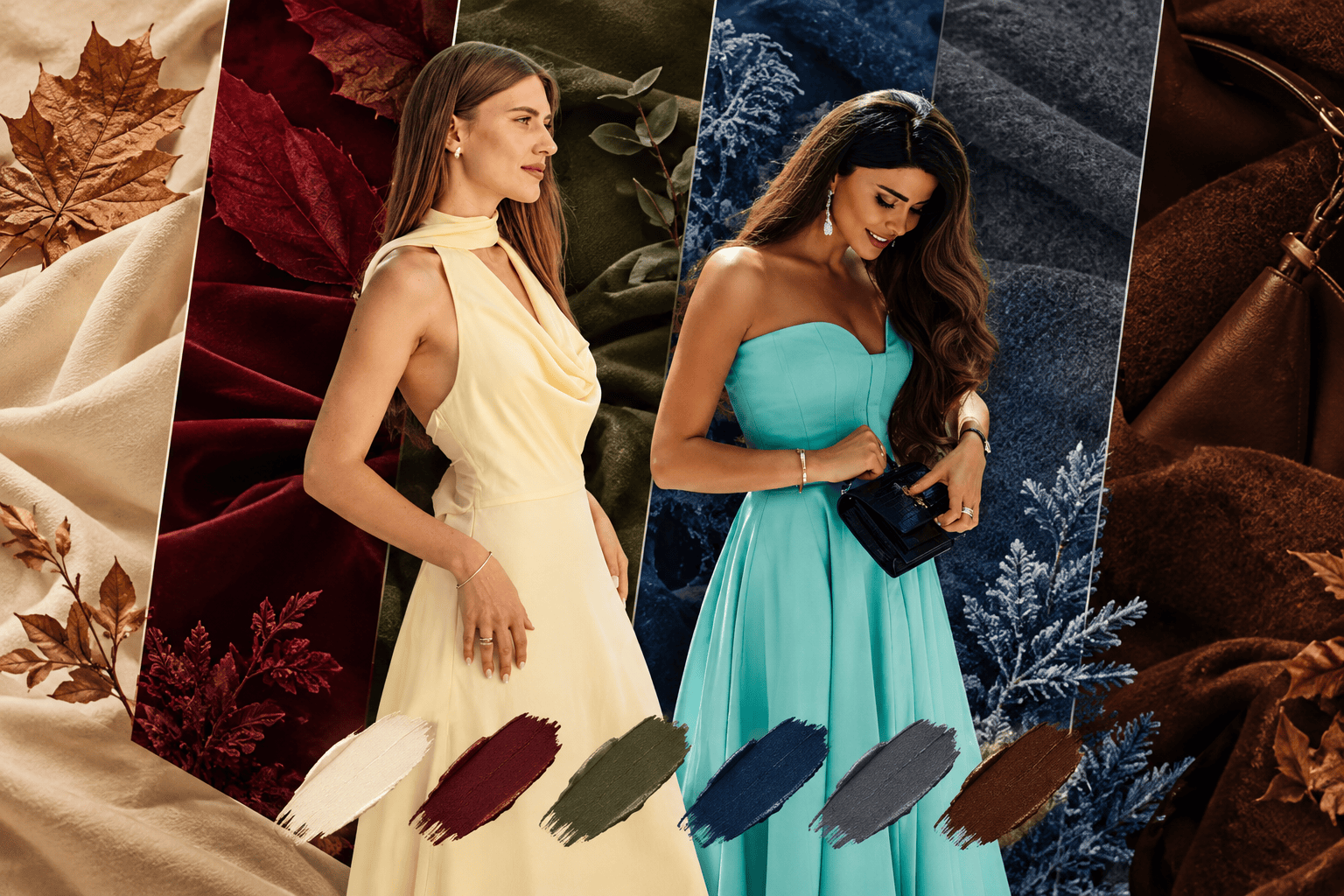
Six saturated colour directions carry the coming autumn and winter, from electric cobalt through to deep reds and purples. One of them will hold a whole coat, another does more in a hat or a collar, so the Autumn/Winter 2026/2027 colour trends are easiest to choose against whatever you are planning to make. Pick the direction that will lead your next project!
The season in six colours – what to keep in mind:
- Six directions: Electric Blue, royal purple, turquoise, butter yellow, burgundy and scarlet red set the fashion colour trends 2026 and the months that follow.
- Texture carries the colour: a saturated shade looks one way on a brushed knit, another on a smooth suede-effect surface and different again on fluid viscose.
- Pairings that work: burgundy sits happily next to scarlet, cobalt next to grey and navy, turquoise next to olive and brown.
- Yellow stays for winter: it does not disappear after summer, it moves onto heavier cloth – knits, sweatshirting and faux fur.
- Shade names in the shop: we describe our colours in our own words – royal blue for Electric Blue, for instance – so match the season by the shade of the cloth itself.
Autumn/Winter 2026/2027 colour trends – six directions of the season
The palette gathers around saturated shades: two cool ones, two jewel tones, one pale and one strong red. That is a wider range than the usual autumn browns, and the Autumn/Winter 2026/2027 colour trends are varied enough for every direction to suit a different kind of project.
Electric Blue
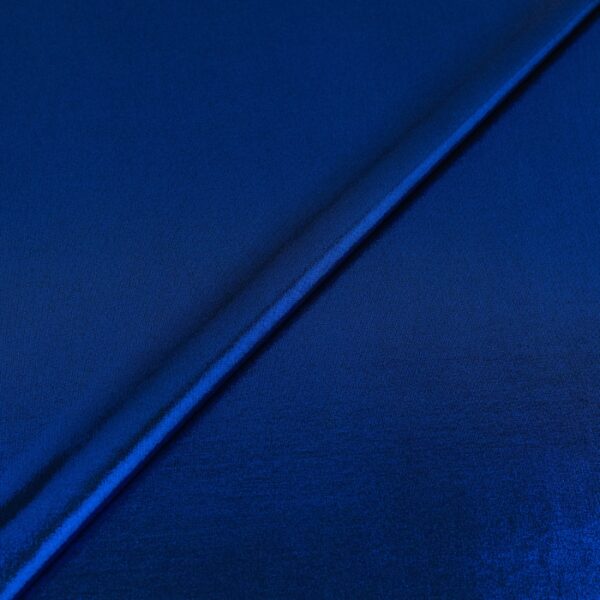
An almost electric cobalt stands in for black this season, and it does so across whole outerwear pieces. A matt knit calms cobalt down, while a smooth weave with a faint sheen pushes it further. Daylight reads it as an intense blue and artificial light can drag it towards navy, so it is worth looking at outerwear cloth under both.
The closest match in this direction is the micro alpaca-style coat-weight knit in royal blue: 100% polyester, 350 GSM and 150 cm wide. It is a knit with a short, plush face that brings warmth and softness, and its flexible structure lets a garment drape naturally instead of turning stiff.
Royal purple
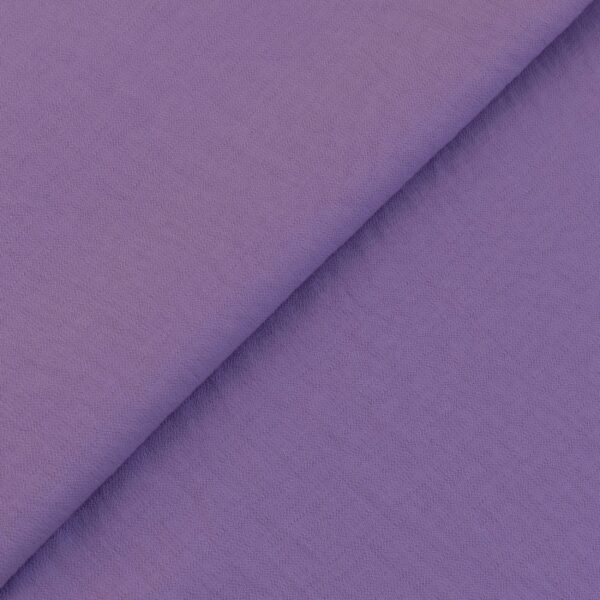
This name covers a whole family, running from deep aubergine to jewel-like amethyst, and saturation is what sets the mood of the finished piece. The darker end behaves almost like a neutral, and large shapes take it well: a coat, a plain dress, a wide skirt.
The purple micro alpaca-style knit is 100% polyester, 350 GSM and 150 cm – the same construction as the royal blue version, so it behaves in much the same way under the needle. In outfits purple enjoys the company of red and settles down next to grey and black.
Turquoise
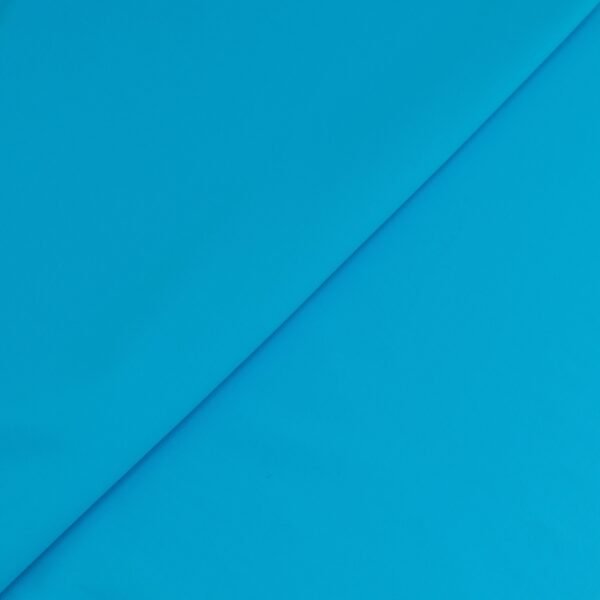
A shade linked with summer moves into the colder months on one condition: it has to move onto a different cloth. A denser knit with a matt surface or cloth with a visible weave takes the holiday edge off the colour. Turquoise also copes well with autumn company such as olive, brown and red.
Turquoise holds up well on polyester fabrics, dyed at high temperature and therefore good at holding saturated colour, and on viscose fabrics with their soft fall, if the garment is meant to move.
Butter yellow

In winter this shade needs heavier cloth, because on thin fabric it still looks like spring. Butter yellow stays in the season once it meets a dense knit, sweatshirting or faux fur. It loses its lightness then and starts working as a warm neutral: it sits well beside grey, beige and navy, and paired with cobalt it makes the boldest combination of the season.
Burgundy
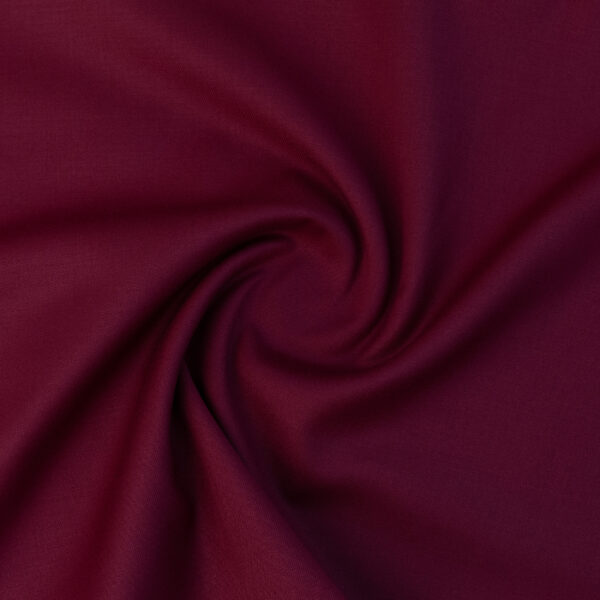
Dark red with a hint of brown carries enough depth to work as a base colour. Beside white, navy and grey it looks classic, and worn head to toe it rarely feels overwhelming. On the cutting table it has two rather different faces, depending on the surface.
Faux fur fabrics suit a full outer garment or decorative trims alone, since dense pile builds shape on its own. The burgundy version is 100% polyester, 550 GSM and 185 cm wide. The suede-effect knit in the same colour lists 96% polyester with 4% elastane, 300 GSM and 150 cm, so it is noticeably lighter and belongs in a skirt or a pair of trousers.
Scarlet red
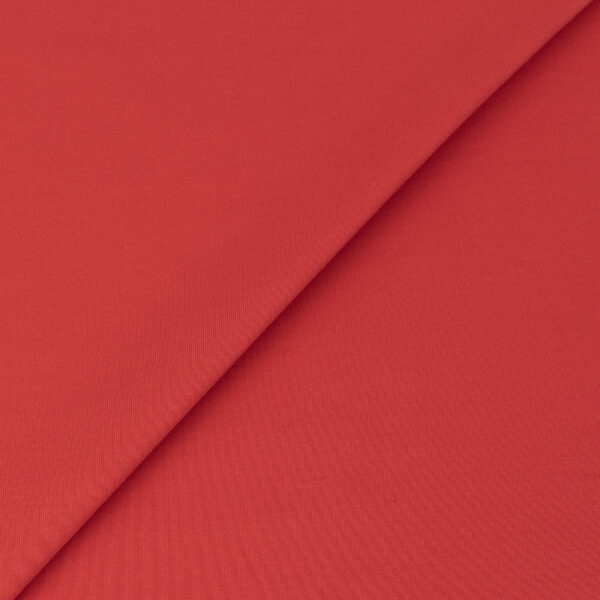
A little of it changes the character of a whole outfit, which leaves two clear routes: a sharp accent or a single-colour look. Tonally scarlet red works with pink and in contrast it looks best against white and black. The nylon alpaca-style coat-weight knit in red is 65% nylon and 35% polyester, 420 GSM and 155 cm wide.
Its weight and brushed surface make the cloth fall more sharply than lighter knits, which suits cuts with a defined shoulder line. Burgundy and scarlet also sit together, provided texture separates them – a matt surface next to a glossy one reads as a decision rather than a mistake.
What to sew in this season’s colours?
Large, simply cut pieces gain the most: a coat, a jacket, a plain skirt or an undecorated dress, because a strong colour is already a decoration in itself. Our alpaca-style fabrics cover dense coat-weight knits in a range of colours, and the name describes the surface rather than the fibre content, since the cards for these cloths list synthetics.
How to match the type of cloth to the project:
- Dense knit for coats: coats and jackets with a clear line that should hold their shape without stiff interfacing.
- Faux fur: a full outer garment for cold days, or just a collar and cuffs when the colour is meant to be an accent.
- Suede-effect knit: skirts, trousers and dresses that rely on a smooth matt surface.
- Viscose with a soft fall: blouses and dresses where the colour should move along with the cloth.
How many metres to buy follows from the pattern, the size, the width of the bolt and the direction of the pile. On piled cloth every piece is laid in the same direction so that the colour keeps its depth across the seams, and that usually raises the quantity compared with the same pattern cut from a smooth fabric.
How to use the season’s colours in accessories and details?
A small piece in a strong colour does as much for an outfit as a whole coat. A hat, a collar or a sleeve trim reads just as clearly in a strong shade while using a short length of cloth, so it is easier to try a colour you would not normally wear. That makes the Autumn/Winter 2026 colours workable even when the rest of the wardrobe stays muted.
Details that take a seasonal colour most easily:
- Hat and snood: knits with a clear structure, bouclé loops among them, keep their shape and usually manage without a lining.
- Collar and cuffs: faux fur adds volume in one place and is also described as cloth for decorative trims.
- Bindings and pipings: a narrow strip of saturated colour on a neutral coat is enough to make an outfit look considered.
A colour from a seasonal list is only the starting point, because the result depends on the texture it lands on and the garment it ends up in. A detail carries the least risk – the winter 2026 colour trends are easiest to try on yourself there – while a larger piece works once the shade has proved itself in everyday wear.
Frequently asked questions about Autumn/Winter 2026/2027 colour trends
Which colours will be fashionable in autumn 2026?
Six directions set the tone: Electric Blue, royal purple, turquoise, butter yellow, burgundy and scarlet red. Greens and peach shades run alongside them, so the palette is wider than those six.
Does butter yellow stay fashionable in winter 2026/2027?
It stays, though in winter it is easier to wear in a small dose – a hat or a collar is enough to show the shade even when a whole coat in yellow feels like too much.
What goes with Electric Blue?
Grey and navy are the safe answer, butter yellow the bolder one, and head-to-toe cobalt the version with no compromise at all.
How should royal purple be worn?
Treat deep aubergine as a neutral in large shapes and keep brighter amethyst for pieces that are seen under good light.
Does burgundy go with scarlet red?
It does – burgundy runs darker with a hint of brown in it, while scarlet stays cleaner and brighter, so the eye reads the two reds separately.
How do you pair turquoise with an autumn outfit?
Autumn light is weaker than summer light, so a washed-out turquoise turns grey under it – the deeper, saturated version holds up far better at this time of year.
 Garment Type
 Blouse
 Coat
 Dress
 Hat
 Hoodie
 Jacket
 Leggings
 Pyjama
 Shirt
 Shorts
 Skirt
 Sweater
 Swimwear
 Trousers
 T-shirt
 Vest
 Fabric Type
 Knitted
 Woven
 Seasons
 Spring/Summer
 Autumn/Winter
 Collection
 Occasion Wear
 Business Wear
 Active Wear
 Casual Wear
 Decorative

